Saturday, October 10, 2015

JobPro: Get Hired!

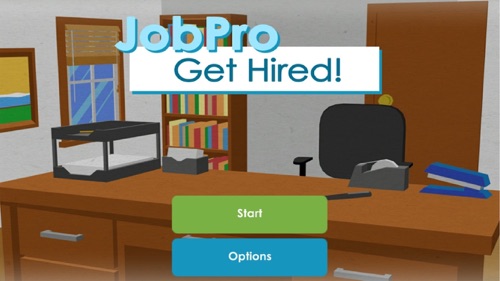
JobPro: Get Hired! is the third part of the JobPro trilogy and it puts you in the hot seat of an interview. Test your skills at more than just answering questions. In this game you need to control your avatar and keep him from nodding off, fidgeting, looking around the room, slouching, and much more.
Test your ability to address and fix these bad behaviors before the interviewer notices. After each interview check and see if you got the job. View your answers to the questions and also check out a detailed summary of how you did overall.

iTunes: https://itunes.apple.com/us/app/jobpro-get-hired!/id1036998640?mt=8
Google Play: https://play.google.com/store/apps/details?id=com.simcoachgames.gethired
Amazon Marketplace: http://www.amazon.com/Simcoach-Games-JobPro-Get-Hired/dp/B015WUS5TU/

Monday, September 21, 2015

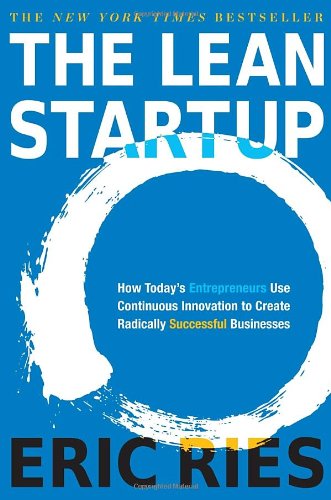
The Lean Startup by Eric Ries

The Lean Startup puts the scientific method into entrepreneurship, forcing entrepreneurs to take a hard look at their product/service and the value it brings (or does not bring). Author Eric Ries promotes testing every product feature with the target audience as fast and as often as possible. Through cohort analysis (looking at the results of a targeted group of users rather than the entire customer base) entrepreneurs are stared in the face by the cold hard facts of their value offering and not deceived by vanity metrics.

Author Eric Ries states a few times that he is out to debunk the entrepreneurial myth that a good idea and hard work trump all. Calculated risks, A/B testing, and failing fast seem to be Eric’s equivalent for working smarter, not harder. It’s a notion that is completely counter-intuitive to the American way, but it is a necessary one. Everyone hears the success stories of the 0.1% of entrepreneurs who hit the jackpot due to what seems like magic (though they claim it’s the result of having the right idea, at the right place and time). The stories that don’t get mass acclaim are of the other 99.9% of ideas that waste time, talent, and money because they were built on unproven assumptions.

Another interesting piece of Ries’ book is his emphasis on instilling the entrepreneurial mindset in any organization, no matter the size. He recommends doing this through the use of MVPs (minimum viable products). MVPs emphasize building the smallest scale version of a product/service as fast possible, and bringing it to market to gauge adoption. MVPs can be all smoke and mirrors or completely inefficient at their initial scale. The emphasis of an MVP is not to accrue revenue initially, it’s to test if people care enough about what you’re building to use it/pay for it.

Some of these points seem like common sense, but I can see how they get pushed to the side amongst all of the other pressures an entrepreneur faces. Someone in the traditional startup setting could receive financial backing for an idea early on, and depending on the source of funding, they may receive pressure to monetize as fast possible without knowing whether their product is valuable or not. Feeling pressure by the bottom line and overall user base (vanity metrics), the entrepreneur completely ignores more meaningful data.

Eric Ries uses proven logic and reason to address crucial business flaws. The Lean Startup is a must read for anyone in the business of developing new business. 

Monday, August 31, 2015

Batman Arkham Origins

Batman Arkham Origins has a lot of the same feel as Arkham City: fun brawling mechanics, massive cityscape, and unique characters. Two differences standout to me with Arkham Origins 1) There is a darker undertone in this game that gives it a sort Max Payne feel, 2) Greater emphasis is put on the refined detective mode. I would play an entire game built around this detective mode alone.

All that said, I don't see myself playing Batman: Arkham Knight anytime soon. These last two games were similar enough to make me feel as if I've had enough of the series. Plus, I think maybe the super hero mania that has swept my generation over the last decade has turned me off from the genre a bit. This is not to say I don't appreciate what the folks at WB have put together. Their unique fighting mechanics stand out to me in all of their games (see Middle Earth: Shadow of Mordor). I think I'm just ready for something different.

Sunday, August 30, 2015

Fallout Shelter


I heard praise about Fallout Shelter for a few weeks before I decided to give it a try. The first thing I noticed about the game was its tutorial system. Tutorials can be particularly tricky for game developers. You want to give players enough information to understand how to play the game, at the same time you don't want to give too much away. The method of delivery is tricky to. Players can get very turned off if they are forced to go through 5 minutes of tutorial before they can start playing, especially if there is a lot of reading involved. At the same time, if you add a skip button, 8 times out of 10 the player will skip the tutorial and feel frustration when they come across something they don't understand.


The developers at Bethesda did a great job in implementing Fallout Shelter's tutorial system. The game has a very small amount of forced tutorial, and what is there is very plain and clear. A few arrows point to UI elements and plainly tell the player what they are and why they are important. Once the player is hooked on the game, they can dive into 20+ pages of optional tutorial info. Fallout Shelter developers don't hold anything back. They give players all of the information they need to develop successful strategies and trust in the balance of the system to provide an engaging experience, even if the player has a detailed road map of how to win.

The golden goose of Fallout Shelter is in its systems design. Once you grasp how all the pieces effect each other, that's when the game gets really addictive. Weeks of gameplay come from beefing up character stats and maximizing resource gathering efficiency. This is all coming from someone who favors the achiever style of playing games. Fallout Shelter has been carefully crafted to fit other play styles as well. Explorers can collect rare armor, weapons, and characters while killers can send their vault dwellers to the wasteland to defeat increasingly difficult creatures.

The art in the game is minimal, fun, and cartoonish. It appears that less time was spent in developing art content, and more was put into creating a juicy user experience. Collecting food, water, and electricity could be something simple that just happens at set intervals without player input, instead, the player has to tap resource rooms in order to collect these resources. Such a small interaction gives players the rewarding feeling of putting in work to gather resources. It's especially rewarding to watch those resources fly up to the top of the screen and add to your stockpile. A+ user experience design for this mobile game.

Fallout Shelter is also an example of excellent cross-promotion marketing. I feel the urge to play Fallout 3: New Vegas every time I open Fallout Shelter. No doubt part of the marketing strategy for the soon to come Fallout 4.

All of this was to say that you've got me Bethesda. I'm thoroughly addicted to Fallout Shelter and excited for Fallout 4.


Saturday, August 22, 2015

Journey into Open Water: A Common Core Math Adventure

The first weekend of May I participated in the Now I Get It! Jam at Carnegie Mellon University's Entertainment Technology Center with my company, Simcoach Games. This game jam was different then your typical jam event. Usually one topic is announced the day of the jam and teams compete against each other to make the best game possible around that topic. For this event, teams were given different topics and were notified of that topic ahead of time. Topics themselves differed from your average jam as well.

"The Now I Get It! Jam was designed around the idea that the power of interactive media can be harnessed to make difficult concepts more approachable by everyone, and that these experiences benefit from the partnership of developers, educators & domain experts."

My team was given challenge #7: Explain the reasoning behind the new common core approach to math and give parents the tools to be able to help their child with math homework in this new style.

With this challenge we built Journey into Open Water: A Common Core Math Adventure. Journey into Open Water was built to be a shared experience between a parent and child where the two explore the fundamentals of common core math together through exploratory puzzles. We decided early on to make the game about the foundations behind common core math instead of the actual equations and algorithms used in the classroom.

Monday, August 17, 2015

CAWP Reinforcers

     Reinforcers allows you to practice tying the same ties used to stabilize concrete on a construction site. Players learn and practice the basic moves for 3 different types of rebar ties and watch structures come together as more rebar is tied. Efficiency, speed, and hand-eye coordination are needed to be a master reinforcer.
     
     We developed this game for the Constructors Association of Western Pennsylvania as part of their Virtual Pre-Apprenticeship program, an online hub for acclimating aspiring construction workers to the different jobs within the industry. Everyone at CAWP has been fantastic to work with, and I know that we at Simcoach look forward to the opportunity to build many more games together.
     
     I highly recommend Reinforcers to anyone who is looking for insight into the world of concrete and rebar tying. The game is challenging and addicting even if you are not interested in construction. Check the game out at one of the links below, and write us a review to let us know what you think.


Sunday, August 16, 2015

Drive: The Surprising Truth About What Motivates Us by Daniel H. Pink

This was Pink book number two for me (see A Whole New Mind). The title, Drive, says it all. In Drive, Pink discusses what motivates us in our daily lives and how that fits into today's culture. Surprise! There are some disconnects between today's individuals and their environments.

Individual: Seeks autonomy, mastery, and purpose. Most motivated (and happy) when pursuing intrinsic rewards. A person is most committed when she can set her own goals and pick her own team to work with.

Environment: Favors extrinsic motivation through carrots and sticks - bonuses, vacation time, salary increases, promotion, demotion, etc. Sets up strict rules/procedures in hopes of limiting the chaotic actions of untrustworthy personnel. 

In Drive, Daniel Pink gives a few example of forward thinking companies that treat their employees just a little differently.

Whole Foods: Let's store employees make new hire decisions,
Netflix: Allows for unlimited vacation days as long as the work is covered.
Tom's: Donates a pair of shoes to someone in need for every pair sold.
3M: Sets aside 20% of the work week for employees to work on projects of their choosing.

All of these companies exhibit certain behaviors to support autonomy, mastery, and purpose. I'm proud to say that the company I work for now does a lot to supports these behaviors as well. So much so that I often feel like the agent that is reintroducing rules and procedures. It's a challenging balance, but a rewarding one as well.

Thanks Daniel Pink for reminding me to take advantage of opportunities to promote autonomy, mastery, and purpose within my life/organization.