Monday, June 22, 2015
Online Games: Literature, New Media, and Narrative, Vanderbilt University
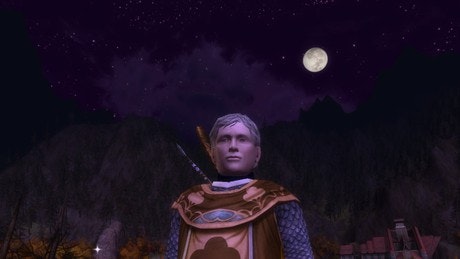
Vanderbilt University's class is about transmedia and remediation. Instructor Jay Clayton uses the various interpretations of J.R.R. Tolkien's Middle Earth to discuss the differences in how each form of media tells a story. Class lectures discuss Tolkien's original novels (The Hobbit and The Lord of the Rings series), Peter Jackson's movies, Turbine's Lord of the Rings Online, and the various epic poems that inspired the original lore. Professor Clayton really makes the class great with his critical analyses of each form of media. He doesn't look at each form of media and judge them by how well they stick to the original lore. Instead, Professor Clayton discusses how well each form uses imagery and conveys emotion.
One interesting lecture discussed the criticism of science fiction and fantasy as being called escapist entertainment. Escapism is described as having no relation to the real world. Learning and real world application do not derive from escapism, only the temporary relief from day-to-day stress. This is a criticism that is often applied to video games. Clayton explains that video games are the newest form of entertainment and are cycling through the same rounds of criticism that novels, poetry, painting, and others went through before. It feels good to hear a rational statement like this. I plan on exploring this argument further.

Sunday, June 21, 2015
A Whole New Mind: Why Right-Brainers Will Rule the Future by Daniel H. Pink
 A Whole New Mind is a page turner as a coworker of mine would say. A quick read with many solid points supporting its main argument which is this: possessing knowledge and knowledge-based skills is not enough to be successful anymore. Diversification is a necessity and a person must have an appreciation and understanding of the creative forces at work in the world to not get left behind. Pink's book presents 6 creative competencies that every person must understand in order to succeed in tomorrow's world. Those competencies are Design, Story, Symphony, Empathy, Play, and Meaning.
My own life experiences support Pink's argument. I graduated with a degree in business (a common pursuit as Pink points out several times), and found success, but it wasn't until I started practicing more creative skills that I began to feel fulfilled.
There are several take-aways in A Whole New Mind. I look forward to putting the following into practice:
- Design: Looking at everyday objects and thinking about their design (beauty and utility).
- Empathy: The group activity of guessing the high and low points of a coworker's day and then comparing them against that person's actual responses.
- Empathy/Story: Taking acting/improv classes.
- Empathy: Interviewing coworkers to learn the professional/personal path they took in life.
- Empathy: Volunteering more.
- Symphony: Listening to symphonies to understand the complexities of how small pieces make up a whole.
- Symphony: Keeping an inspiration board for everyday things that can enhance a current/future project.
- Symphony: Having more organized brainstorm sessions.
- Meaning: Assembling a list of things I am thankful for. One for every year of my life.
- Meaning: Taking spirituality, and the exploration of spirituality seriously.
- Meaning: Taking time out of the day/week to practice mindfulness.
Saturday, June 20, 2015
LIMBO
This summer I have taken full advantage of the Steam Monster Summer Sale to stock up on games that have long been on my list. One of those games is LIMBO: a 2D black and white side-scrolling puzzle game featuring an unnamed boy searching for his sister. The game arms the player with simple core mechanics (run, jump, climb, grab, push, and pull) which are nicely complemented by a basic physics system. Advanced mechanics are gradually introduced in the game at certain points (reverse gravity, activate magnets, etc.).
The colorless artwork, continuous gameplay, and minimal background noise create a very eerie ambiance in LIMBO. You encounter giant spiders, band saws, bear traps, and many other unpleasant obstacles throughout the game, all while tackling increasingly more difficult puzzles. The story is limited which leaves much room for the player to contemplate and inject his/her own meaning. I would not have realized it was the character's sister I was searching for had it not been for an abstract I read after playing.
 There is one point, where after having been through many dark and sad environments, you come across a butterfly, then another, and several more. You start to think to yourself, "maybe there is some good left in this virtual world after all." These butterflies lead you toward your sister who is playing in the dirt on the other end of the screen. Of course my first instinct was to sprint toward the playing girl in hopes of no longer experiencing this dark virtual world all alone. Just before you reach her, a glowing slug drops from a tree branch, lands on your head, and burrows into your mind. This event triggers a gameplay mechanic where the player loses control of his character until the slug is removed. I sat watching my character run out of control in the opposite direction of my objective. I felt shocked as the hope I once had was sucked out of me.
LIMBO is unique in that it triggers emotions not typically experienced in a platformer (sadness, hope, hopelessness, wonder). This was a short game, without much of a story and yet it packed more of an emotional punch than any movie I have seen recently. One could spend a good amount of time pulling deep meaning out of LIMBO. I recommend this game to anyone who is struggling with the "games as art" argument. If LIMBO is not a work of art then I don't know what is.
Tuesday, May 19, 2015
Reality is Broken by Jane McGonigal

Part III: How Very Big Games Can Change the World is my favorite section of McGonigal's book. In this section, Jane talks about ten game designs that utilize crowdsourcing to solve real world problems. A few of these designs include inviting people to browse through expense receipts from members of government to identify political scandal and engaging individuals to practice planet craft to plan for the next 1000 years of life on Earth. Another amazing example involves using the idle computing power of networked Playstations to run protein folding simulations in order to better understand how certain diseases like Alzheimer's and various cancers manifest.
Crowdsourced problem solving on a global scale sounds epic for lack of a better word. It reminds me of the premise of any movie where there is an impending life ending threat and humanity has to put its differences aside in order to survive against all odds. Unfortunately, I think it really will take a global threat in order for the world to come together and put our collaboration super powers into full use. Necessity is the mother of invention after all, and nothing necessitates global collaboration like a global threat. There are too many distractions for the world to come together otherwise (politics, religion, greed, etc.).
Even though I believe the global community is a little ways off from adopting game logic to solve its major problems, it is still comforting to know that people like Jane McGonigal exist to paint the picture and lay the ground work for us to join in on when we finally come to our senses. Thanks Jane for a good read, and for planting the seeds for a better future.
Thursday, May 14, 2015
CAWP Traffic Control
 Traffic Control is another mini game for CAWP's Virtual Pre-Apprenticeship program. In the game, the player is tasked with controlling traffic around a construction sight, a job that is easier said than done. Just like a flagger in real life, the player has to be aware of oncoming traffic, emergency vehicles, construction equipment, animal wildlife, rock slides, and other elements. The player earns points for every vehicle that safely circumnavigates the construction site. The highest score I have seen so far is 2,000 points. If you think you've got what it takes to master the traffic controlling arts and beat this high score, then download CAWP Traffic Control at the links below. Also write us a review to let us know what you think.
Apple Store:
https://itunes.apple.com/us/app/cawp-traffic-control/id966998499?mt=8
Google Play:
https://play.google.com/store/apps/details?id=com.SimcoachGames.CAWPTraffic&hl=en
Sunday, April 19, 2015
Excavator (A CAWP Arcade Game)
.png)
We developed this game for the Constructors Association of Western Pennsylvania as part of their Virtual Pre-Apprenticeship program, an online hub for acclimating aspiring construction workers to the different jobs within the industry. Everyone at CAWP has been fantastic to work with, and I know that we at Simcoach look forward to the opportunity to build many more games together. *fingers crossed for Space Excavator*
I highly recommend Excavator to anyone who is looking for a fun and challenging puzzle game. Check the game out at one of the links below, and write us a review to let us know what you think.
Wednesday, April 15, 2015
Dishonored

Steampunk refers to a subgenre of science fiction that incorporates technology and aesthetics inspired by 19th-century steam-powered machinery. There is often a wealth gap featured in steampunk fiction where the wealthy get to play with all of the fantastical steam-powered novelties and the poor battle typical old society problems (famine, disease, etc.). Dishonored has a very similar style to steampunk, except everything in the game is powered by whale oil instead of steam, hence the term "whalepunk." Additionally, whale oil is used to create electricity (arc pylons, walls of light). The game does a very good job of featuring the typical steampunk societal issues. The player experiences all sides of Dunwall's economic climate by having to sneak through the city's plague infested streets followed by crashing high society parties.
I experienced varying degrees of excitement and disappointment during the first few hours of Dishonored. My original strategy was to use my sword and hack through everything in my path, which made the game feel a little flat. I think I killed 15 guards on my first play through of level 1 and received a "high" chaos rating. Seeing the chaos rating and feeling a little disappointed at how one dimensional the game was so far, I started reading through forums to find out if things get better. It turns out that things do get better. Not only do you get different endings depending on your overall chaos rating, but the game adapts to your style of play as well. Killing more characters puts the city on high alert, which increases the amount of opponents you'll face. Using a sneakier approach actually reduces some of the city's plight, and leaves you with less enemies to circumnavigate.
The game is tough to go through if you choose not to kill characters, but there will be less NPCs to sneak past if you choose to play this way. If you want to hack and slash your way through the game, the system will add more enemy NPCs and hordes of rats, making it tougher to fight everyone off. I received great joy once I learned about the game's adaptive system and immediately replayed the first level as sneakily as possible. The game functions so well as a stealth RPG. I was reminded of the fun I used to have playing Metal Gear Solid and Tenchu Stealth Assassin. Then a new element was introduced, and my excitement fell once again.
Shortly into the game you are given special powers. These powers let the player see through walls, teleport, possess creatures, push back enemies, summon rats, and more. The player gradually unlocks and upgrades powers as they collect runes throughout the game. I was extremely disappointed when powers were first introduced. When you start the game without powers, it is refreshing and feels like an older game where strategy and perseverance are needed to overcome challenges. Just when the game was starting to feel original and challenging, here come the same old powers already overused in every other game to hold the hands of impatient players. The player is the one who ultimately decides whether or not to use powers, which again goes back to the player having control of how difficult they want to make the game. With that said, it is very difficult to resist using x-ray vision knowing that it will help you get past a particularly difficult point in a level that you have already failed five times.
I played the game all the way through as stealthily as possible. I killed one character the whole game (by accident), and was only seen by enemies less than a handful of times. Dishonored was extremely enjoyable for me playing this way. I plan to play through the game at least one more time using a more chaotic approach. I'll have to come back and edit this post once that happens. Props to Bethesda for making a cool adaptive world. I dock you a couple points for lack of originality with the addition of powers, but I understand that the company was trying to keep the market for Dishonored as wide as possible, Not everyone welcomes challenge in a game as much as me. Looking forward to playing again soon.
Subscribe to:
Posts (Atom)