Saturday, April 30, 2016

Developing the Leader Within You by John C. Maxwell


Great book with many great lessons. Definitely worth rereading often and again.

Some of my Favorite Quotes:

  • "When I have integrity, my words and my deeds match up. I am who I am, no matter where I am or who I am with."
  • "The water does not flow until the faucet is turned on." 
    • Meaning, in order to gain traction you need to start doing something.
  • "What you are going to be tomorrow, you are becoming today." 
    • The things you do everyday are going to define the future you.
  • "The more you change, the more you become an instrument of change in the lives of others. If you want to become a change agent, you also must change."
    • Personal growth and a discomfort with being comfortable will help lead a meaningful life.
  • "If you want to continue leading, you must continue changing."
  • ..."He must first understand the two important requisites to bringing about change: knowing the technical requirements of the change, and understanding the attitude and motivational demands for bringing it about."
  • "People need to change their perspectives, not their problems."
    • Everyone is always going to have problems. Attitude will determine how they are handled.
  • "They realized they could not determine every circumstance in life but they could determine their choice of attitude toward every circumstance."
  • "Everyone who's ever taken a shower has an idea. It's the person who gets out of the shower, dries off, and does something about it who makes a difference."
  • "The remarkable thing is that we have a choice every day regarding the attitude we will embrace for that day."
  • "What lies behind us and what lies before us are tiny matters compared to what lies within us."
  • "Once our minds are 'tattoed' with negative thinking, our chances for longterm success diminish."

Tools
  • The self-discipline tool:
    1. List 5 areas in your life that lack discipline.
    2. Place them in order of your priority for conquering them.
    3. Take them on, one at a time.
    4. Secure resources, such as books and tapes, that will give you instruction and motivation to conquer each area.
    5. Ask a person who models the trait you want to possess to hold you accountable for it.
    6. Spend 15 minutes each morning getting focused in order to get control of this weak area in your life.
    7. Do a 5 minute checkup on yourself midday.
    8. Take 5 minutes in the evening to evaluate your progress.
    9. Allow 60 days to work on one area before you go to the next.
    10. Celebrate with the one who holds you accountable as you show continued success.
  • The integrity test: ask someone who knows you well what areas of your life they see as consistent (you do what you say) and what areas they see as inconsistent (you say but don't always live).

Friday, April 29, 2016

Heart Failure Coach


Cover artHeart Failure Coach is a patient engagement game, administered by members of the health care team, where players interact with and guide Simon, a character with congestive heart failure (CHF) who was recently released from the hospital. The game focuses on reinforcement of critical self-maintenance skills necessary for heart failure patients to stay out of the hospital.  Players help Simon complete key behaviors like: tracking his weight, taking his prescribed medicine, and calling the doctor if needed each day for a virtual week. Players need to watch out for those midnight snacks and other cravings because they could negatively affect Simon’s progress and might cause him to be readmitted to the hospital. At the end of the game, patients are given feedback on their treatment of Simon - whether they helped him to complete the essential actions and whether or not he was readmitted to the hospital.

Heart Failure Coach was developed in partnership with UPMC, a world-renowned health care provider with more than 20 hospitals and 500 doctors’ offices  based in Pittsburgh, PA , for both inpatient and outpatient environments who see patients at risk for readmission for heart failure. This healthcare game has improved retention of the critical self-management skills for patients who have played and has had a positive impact on the number of readmissions.

Start taking care of Simon today!

For more information, visit: http://www.simcoachgames.com/heart-failure

iTunes: https://itunes.apple.com/us/app/heart-failure-coach/id1107028233?ls=1&mt=8
Google Play: https://play.google.com/store/apps/details?id=com.simcoachgames.heartfailurecoach
Amazon Marketplace: http://www.amazon.com/Simcoach-Games-Heart-Failure-Coach/dp/B01EVKD17I/


Monday, April 25, 2016

Flow the Psychology of Optimal Experience by Mihaly Csikszentmihalyi

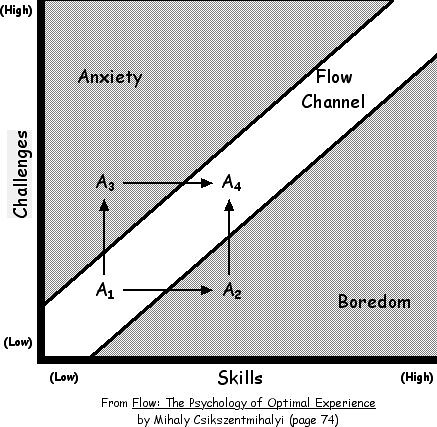
The most important/influential part of Flow the Psychology of Optimal Experience came early on in the form of a graph illustrating the concept of flow channels (below). To put it simply, a person will stay engaged with an activity as long as the person faces the appropriate level of challenge to match their skill level. If someone's skill in a task outgrows the level of challenge, then they will quickly become board and lose interest. If someone is up against a challenge that exceeds their skill level, they will experience anxiety and frustration. Difficulty should increase to match the person's skill level as it grows.

Sunday, April 24, 2016

Harness Hero

Falls are the leading cause of death among construction workers in the United States. To protect workers, employers must not only provide the right protective equipment but must ensure workers understand proper setup and safe use of that equipment.

Harness Hero the video game engages players in the key decisions of using a fall arrest system. At each step in the game, the player chooses where to anchor, what anchorage device to use, how to set up the harness, what connection device to use, and so on. The player also inspects the equipment along the way for burns, rips, rust and other malfunctions. At the end of each play, the player encounters a fall, and depending on how well they did setting up their fall arrest system, the player will either witness a rescue or a severe injury or even a fatality. Harness Hero was developed under the guidance of safety professionals from all corners of the construction industry.

Start practicing proper fall arrest setup in a fun and safe way. For more information on the development of the Harness Hero video game, visit: http://www.simcoachgames.com/harness-hero

For more information on fall prevention, visit: https://www.osha.gov/stopfalls/index.html

iTunes: https://itunes.apple.com/us/app/harness-hero/id1103764196?mt=8
Google Play: https://play.google.com/store/apps/details?id=com.simcoachgames.fallprotection&hl=en
Amazon Marketplace: http://www.amazon.com/Simcoach-Games-Harness-Hero/dp/B01EBB9K5O

Sunday, November 15, 2015

Introduction to Software Product Management, University of Alberta


This was the first course of the Software Product Management specialization on Coursera. The specialization is made up of five classes and a capstone project. There wasn't much to this first course, just an overview of the specialization. Looking forward to the next course, Software Processes and Agile Practices.

Saturday, October 17, 2015

Fundamentals of Project Planning and Management, University of Virginia

The following is a small excerpt from the course description of Fundamentals of Project Planning and Management by the University of Virginia:

"Fundamentals of Project Planning and Management will introduce basic concepts from project planning, critical path method, network analysis, and simulation for project risk analysis. You will gain an appreciation for what is required in planning and executing large-scale projects and gain an understanding of Agile Project Management principles. Together, we will develop an awareness of some behavioral biases that come to play in project settings and identify how these impact the planning and execution of a project."


For me the class was helpful in learning how to articulate the struggles that teams face in completing projects. The professor goes into detail about the faults of multi-tasking and the tendencies of student's syndrome and Parkinson's law. I've used some of the examples presented in this class with teams that I work with to try and mitigate some of these risks.

The review of project management practices and risk analysis was interesting, but did not have much application to those practicing iterative software development. When the professor did finally get to Agile Project Management Principles, it was much more of a broad overview. Sort of a list of definitions and not much else.

I recommend Fundamentals of Project Planning and Management for those just entering the arena of traditional project management. If your company practices any specific niche of project management (anything other than waterfall), then a class like Intro to Software Product Management by the University of Alberta may be more your style.

Monday, October 12, 2015

JobPro: Get Dressed!

In JobPro: Get Dressed! you get a chance to dress for your interview based off of tips and your general knowledge of the company. Seems easy? Not so fast. There are various factors that go into picking out an outfit such as the role you are interviewing for and the atmosphere of the company.

Make sure you leave a lasting first impression in your interview. Prepare outfits for interviews with 14 different companies and 42 positions. After you make your selection you will receive detailed feedback about the outfit you chose and its compatibility with the position you were interviewing for.

iTuneshttps://itunes.apple.com/us/app/jobpro-get-dressed!/id1036998941?mt=8
Google Playhttps://play.google.com/store/apps/details?id=com.simcoachgames.getdressed
Amazon Marketplacehttp://www.amazon.com/Simcoach-Games-JobPro-Get-Dressed/dp/B015WUSKXQ

Sunday, October 11, 2015

JobPro: Get Prepared!

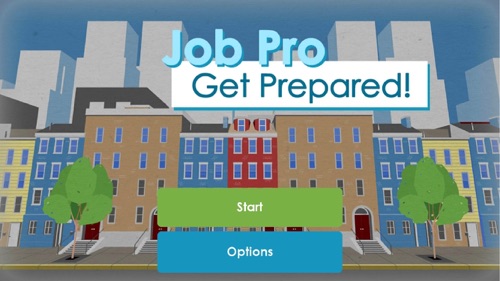
In JobPro: Get Prepared! you are put in the shoes of someone who has just landed an interview. Congratulations! Now it’s up to you to use the time you have to prepare and get to the interview on time. Prepare for your interview by researching the company and printing your resume or relieve stress by playing video games and exercising at the park. It’s up to you what you do with your time. Just remember, there is an interview waiting for you.


In JobPro, preparation is key. Navigate across 8 artistic environments like the coffee shop, park, and library where you engage in activities that affect your preparation and stress. Challenge yourself by completing all 3 difficulty levels. Your resources and time are limited with each increase in difficulty. See if you have what it takes be punctual, prepared, and professionally dressed when you arrive for your interview. Remember to get prepared in order to get hired!

iTunes: https://itunes.apple.com/us/app/jobpro-get-prepared!/id1036979990?mt=8
Google Play: https://play.google.com/store/apps/details?id=com.simcoachgames.getprepared
Amazon Marketplace: http://www.amazon.com/Simcoach-Games-JobPro-Get-Prepared/dp/B015WUR74E/

Saturday, October 10, 2015

JobPro: Get Hired!

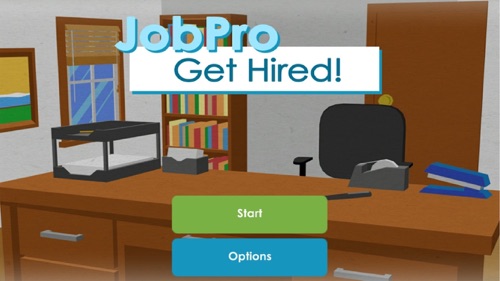
JobPro: Get Hired! is the third part of the JobPro trilogy and it puts you in the hot seat of an interview. Test your skills at more than just answering questions. In this game you need to control your avatar and keep him from nodding off, fidgeting, looking around the room, slouching, and much more.

Test your ability to address and fix these bad behaviors before the interviewer notices. After each interview check and see if you got the job. View your answers to the questions and also check out a detailed summary of how you did overall.

iTunes: https://itunes.apple.com/us/app/jobpro-get-hired!/id1036998640?mt=8
Google Play: https://play.google.com/store/apps/details?id=com.simcoachgames.gethired
Amazon Marketplace: http://www.amazon.com/Simcoach-Games-JobPro-Get-Hired/dp/B015WUS5TU/

Monday, September 21, 2015

The Lean Startup by Eric Ries

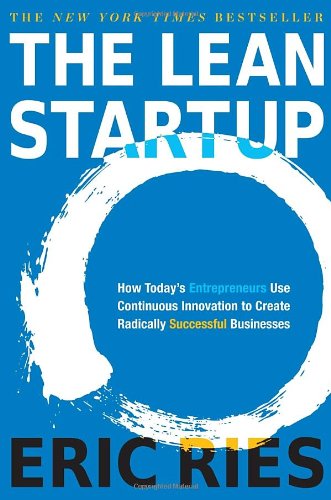
The Lean Startup puts the scientific method into entrepreneurship, forcing entrepreneurs to take a hard look at their product/service and the value it brings (or does not bring). Author Eric Ries promotes testing every product feature with the target audience as fast and as often as possible. Through cohort analysis (looking at the results of a targeted group of users rather than the entire customer base) entrepreneurs are stared in the face by the cold hard facts of their value offering and not deceived by vanity metrics.

Author Eric Ries states a few times that he is out to debunk the entrepreneurial myth that a good idea and hard work trump all. Calculated risks, A/B testing, and failing fast seem to be Eric’s equivalent for working smarter, not harder. It’s a notion that is completely counter-intuitive to the American way, but it is a necessary one. Everyone hears the success stories of the 0.1% of entrepreneurs who hit the jackpot due to what seems like magic (though they claim it’s the result of having the right idea, at the right place and time). The stories that don’t get mass acclaim are of the other 99.9% of ideas that waste time, talent, and money because they were built on unproven assumptions.

Another interesting piece of Ries’ book is his emphasis on instilling the entrepreneurial mindset in any organization, no matter the size. He recommends doing this through the use of MVPs (minimum viable products). MVPs emphasize building the smallest scale version of a product/service as fast possible, and bringing it to market to gauge adoption. MVPs can be all smoke and mirrors or completely inefficient at their initial scale. The emphasis of an MVP is not to accrue revenue initially, it’s to test if people care enough about what you’re building to use it/pay for it.

Some of these points seem like common sense, but I can see how they get pushed to the side amongst all of the other pressures an entrepreneur faces. Someone in the traditional startup setting could receive financial backing for an idea early on, and depending on the source of funding, they may receive pressure to monetize as fast possible without knowing whether their product is valuable or not. Feeling pressure by the bottom line and overall user base (vanity metrics), the entrepreneur completely ignores more meaningful data.

Eric Ries uses proven logic and reason to address crucial business flaws. The Lean Startup is a must read for anyone in the business of developing new business. 

Monday, August 31, 2015

Batman Arkham Origins

Batman Arkham Origins has a lot of the same feel as Arkham City: fun brawling mechanics, massive cityscape, and unique characters. Two differences standout to me with Arkham Origins 1) There is a darker undertone in this game that gives it a sort Max Payne feel, 2) Greater emphasis is put on the refined detective mode. I would play an entire game built around this detective mode alone.

All that said, I don't see myself playing Batman: Arkham Knight anytime soon. These last two games were similar enough to make me feel as if I've had enough of the series. Plus, I think maybe the super hero mania that has swept my generation over the last decade has turned me off from the genre a bit. This is not to say I don't appreciate what the folks at WB have put together. Their unique fighting mechanics stand out to me in all of their games (see Middle Earth: Shadow of Mordor). I think I'm just ready for something different.

Sunday, August 30, 2015

Fallout Shelter


I heard praise about Fallout Shelter for a few weeks before I decided to give it a try. The first thing I noticed about the game was its tutorial system. Tutorials can be particularly tricky for game developers. You want to give players enough information to understand how to play the game, at the same time you don't want to give too much away. The method of delivery is tricky to. Players can get very turned off if they are forced to go through 5 minutes of tutorial before they can start playing, especially if there is a lot of reading involved. At the same time, if you add a skip button, 8 times out of 10 the player will skip the tutorial and feel frustration when they come across something they don't understand.


The developers at Bethesda did a great job in implementing Fallout Shelter's tutorial system. The game has a very small amount of forced tutorial, and what is there is very plain and clear. A few arrows point to UI elements and plainly tell the player what they are and why they are important. Once the player is hooked on the game, they can dive into 20+ pages of optional tutorial info. Fallout Shelter developers don't hold anything back. They give players all of the information they need to develop successful strategies and trust in the balance of the system to provide an engaging experience, even if the player has a detailed road map of how to win.

The golden goose of Fallout Shelter is in its systems design. Once you grasp how all the pieces effect each other, that's when the game gets really addictive. Weeks of gameplay come from beefing up character stats and maximizing resource gathering efficiency. This is all coming from someone who favors the achiever style of playing games. Fallout Shelter has been carefully crafted to fit other play styles as well. Explorers can collect rare armor, weapons, and characters while killers can send their vault dwellers to the wasteland to defeat increasingly difficult creatures.

The art in the game is minimal, fun, and cartoonish. It appears that less time was spent in developing art content, and more was put into creating a juicy user experience. Collecting food, water, and electricity could be something simple that just happens at set intervals without player input, instead, the player has to tap resource rooms in order to collect these resources. Such a small interaction gives players the rewarding feeling of putting in work to gather resources. It's especially rewarding to watch those resources fly up to the top of the screen and add to your stockpile. A+ user experience design for this mobile game.

Fallout Shelter is also an example of excellent cross-promotion marketing. I feel the urge to play Fallout 3: New Vegas every time I open Fallout Shelter. No doubt part of the marketing strategy for the soon to come Fallout 4.

All of this was to say that you've got me Bethesda. I'm thoroughly addicted to Fallout Shelter and excited for Fallout 4.


Saturday, August 22, 2015

Journey into Open Water: A Common Core Math Adventure

The first weekend of May I participated in the Now I Get It! Jam at Carnegie Mellon University's Entertainment Technology Center with my company, Simcoach Games. This game jam was different then your typical jam event. Usually one topic is announced the day of the jam and teams compete against each other to make the best game possible around that topic. For this event, teams were given different topics and were notified of that topic ahead of time. Topics themselves differed from your average jam as well.

"The Now I Get It! Jam was designed around the idea that the power of interactive media can be harnessed to make difficult concepts more approachable by everyone, and that these experiences benefit from the partnership of developers, educators & domain experts."

My team was given challenge #7: Explain the reasoning behind the new common core approach to math and give parents the tools to be able to help their child with math homework in this new style.

With this challenge we built Journey into Open Water: A Common Core Math Adventure. Journey into Open Water was built to be a shared experience between a parent and child where the two explore the fundamentals of common core math together through exploratory puzzles. We decided early on to make the game about the foundations behind common core math instead of the actual equations and algorithms used in the classroom.

Monday, August 17, 2015

CAWP Reinforcers

     Reinforcers allows you to practice tying the same ties used to stabilize concrete on a construction site. Players learn and practice the basic moves for 3 different types of rebar ties and watch structures come together as more rebar is tied. Efficiency, speed, and hand-eye coordination are needed to be a master reinforcer.
     
     We developed this game for the Constructors Association of Western Pennsylvania as part of their Virtual Pre-Apprenticeship program, an online hub for acclimating aspiring construction workers to the different jobs within the industry. Everyone at CAWP has been fantastic to work with, and I know that we at Simcoach look forward to the opportunity to build many more games together.
     
     I highly recommend Reinforcers to anyone who is looking for insight into the world of concrete and rebar tying. The game is challenging and addicting even if you are not interested in construction. Check the game out at one of the links below, and write us a review to let us know what you think.


Sunday, August 16, 2015

Drive: The Surprising Truth About What Motivates Us by Daniel H. Pink

This was Pink book number two for me (see A Whole New Mind). The title, Drive, says it all. In Drive, Pink discusses what motivates us in our daily lives and how that fits into today's culture. Surprise! There are some disconnects between today's individuals and their environments.

Individual: Seeks autonomy, mastery, and purpose. Most motivated (and happy) when pursuing intrinsic rewards. A person is most committed when she can set her own goals and pick her own team to work with.

Environment: Favors extrinsic motivation through carrots and sticks - bonuses, vacation time, salary increases, promotion, demotion, etc. Sets up strict rules/procedures in hopes of limiting the chaotic actions of untrustworthy personnel. 

In Drive, Daniel Pink gives a few example of forward thinking companies that treat their employees just a little differently.

Whole Foods: Let's store employees make new hire decisions,
Netflix: Allows for unlimited vacation days as long as the work is covered.
Tom's: Donates a pair of shoes to someone in need for every pair sold.
3M: Sets aside 20% of the work week for employees to work on projects of their choosing.

All of these companies exhibit certain behaviors to support autonomy, mastery, and purpose. I'm proud to say that the company I work for now does a lot to supports these behaviors as well. So much so that I often feel like the agent that is reintroducing rules and procedures. It's a challenging balance, but a rewarding one as well.

Thanks Daniel Pink for reminding me to take advantage of opportunities to promote autonomy, mastery, and purpose within my life/organization.

Tuesday, August 4, 2015

The Elder Scrolls 5: Skyrim


The third time's the charm. It took me three attempts in the five years Skyrim has been out to finally play through the entire game.

Attempt 1: I played some of the main quest and decided I should probably take on some guilds and side quests in order to better prepare for the rest of the main quest line. The result was playing through the College of Winterhold (Mage's Guild), Dark Brotherhood (Assassin's Guild), and Thieve's Guild quest lines before losing interest in the main quest line and taking a break from the game for a while.

Attempt 2: Again, I started the main quest line and quickly found more entertainment in some of the game's other content. This time I played through the Companions and College of Winterhold quest lines. I also took on more of an explorers play style. I set out to earn as many words of power as I could, get my hands on all the Daedric items that I could find, and even learn some of the legendary spells that could only be gained at levels 90 or above. Even after accomplishing all of this, I did not take the time to complete the main quest line. It would be more than a year before I tried again.

Attempt 3: A Steam Summer Sale influenced me to purchase Skyrim and all of its expansions at a fantastic price. I told myself that I would not play any of the expansions until I completed the main quest line. Fast forward a few weeks and I have played through Dragonborn, Dawnguard, and of course the original game's quest line.

All that's left to do now is explore the rest of Solstheim, build a house, and play through some side quests. Skyrim is a fantastic game, but Morrowind is still my favorite Elder Scrolls game. We'll see if the next installment of the series revisits the island of Vvardenfell.

Monday, August 3, 2015

The 4 Disciplines of Execution by Chris McChesney, Sean Covey, and Jim Huling

I see two valuable outcomes from reading this book:

1) Being given a formula to accomplish Wildly Important Goals (WIGs).
2) The realization that the majority of our efforts go toward fighting the whirlwind. We work to get through the day, and rarely to accomplish what is truly important.

What is ironic about 4DX is its similarity to playing a game. There are goals, steps to work toward those goals, a scoreboard, and accountability systems. That sounds like every team sport ever played.

Jim Huling, Sean Covey, and Chris McChesney take goal setting to the next level in The 4 Disciplines of Execution. The book is not just about setting and accomplishing goals, but about motivating teams to accomplish long term goals in a manner that builds accountability and engagement.

The book addresses high level leaders and managers who are struggling to hit performance metrics, those that can strategize but find difficulty executing or rather inspiring others to execute. I found value in this book coming from almost the opposite perspective, as a performer who is looking to learn better how to develop strategy.

I look forward to practicing 4DX at the office in the weeks to come and gamifying the process of making games.


Monday, June 22, 2015

Online Games: Literature, New Media, and Narrative, Vanderbilt University

Vanderbilt University's class is about transmedia and remediation. Instructor Jay Clayton uses the various interpretations of J.R.R. Tolkien's Middle Earth to discuss the differences in how each form of media tells a story. Class lectures discuss Tolkien's original novels (The Hobbit and The Lord of the Rings series), Peter Jackson's movies, Turbine's Lord of the Rings Online, and the various epic poems that inspired the original lore. Professor Clayton really makes the class great with his critical analyses of each form of media. He doesn't look at each form of media and judge them by how well they stick to the original lore. Instead, Professor Clayton discusses how well each form uses imagery and conveys emotion.

One interesting lecture discussed the criticism of science fiction and fantasy as being called escapist entertainment. Escapism is described as having no relation to the real world. Learning and real world application do not derive from escapism, only the temporary relief from day-to-day stress. This is a criticism that is often applied to video games. Clayton explains that video games are the newest form of entertainment and are cycling through the same rounds of criticism that novels, poetry, painting, and others went through before. It feels good to hear a rational statement like this. I plan on exploring this argument further.

Sunday, June 21, 2015

A Whole New Mind: Why Right-Brainers Will Rule the Future by Daniel H. Pink

A Whole New Mind is a page turner as a coworker of mine would say. A quick read with many solid points supporting its main argument which is this: possessing knowledge and knowledge-based skills is not enough to be successful anymore. Diversification is a necessity and a person must have an appreciation and understanding of the creative forces at work in the world to not get left behind. Pink's book presents 6 creative competencies that every person must understand in order to succeed in tomorrow's world. Those competencies are Design, Story, Symphony, Empathy, Play, and Meaning.

My own life experiences support Pink's argument. I graduated with a degree in business (a common pursuit as Pink points out several times), and found success, but it wasn't until I started practicing more creative skills that I began to feel fulfilled.

There are several take-aways in A Whole New Mind. I look forward to putting the following into practice:
  • Design: Looking at everyday objects and thinking about their design (beauty and utility).
  • Empathy: The group activity of guessing the high and low points of a coworker's day and then comparing them against that person's actual responses.
  • Empathy/Story: Taking acting/improv classes.
  • Empathy: Interviewing coworkers to learn the professional/personal path they took in life.
  • Empathy: Volunteering more.
  • Symphony: Listening to symphonies to understand the complexities of how small pieces make up a whole.
  • Symphony: Keeping an inspiration board for everyday things that can enhance a current/future project.
  • Symphony: Having more organized brainstorm sessions.
  • Meaning: Assembling a list of things I am thankful for. One for every year of my life.
  • Meaning: Taking spirituality, and the exploration of spirituality seriously.
  • Meaning: Taking time out of the day/week to practice mindfulness.

Saturday, June 20, 2015

LIMBO

This summer I have taken full advantage of the Steam Monster Summer Sale to stock up on games that have long been on my list. One of those games is LIMBO: a 2D black and white side-scrolling puzzle game featuring an unnamed boy searching for his sister. The game arms the player with simple core mechanics (run, jump, climb, grab, push, and pull) which are nicely complemented by a basic physics system. Advanced mechanics are gradually introduced in the game at certain points (reverse gravity, activate magnets, etc.).

The colorless artwork, continuous gameplay, and minimal background noise create a very eerie ambiance in LIMBO. You encounter giant spiders, band saws, bear traps, and many other unpleasant obstacles throughout the game, all while tackling increasingly more difficult puzzles. The story is limited which leaves much room for the player to contemplate and inject his/her own meaning. I would not have realized it was the character's sister I was searching for had it not been for an abstract I read after playing.

There is one point, where after having been through many dark and sad environments, you come across a butterfly, then another, and several more. You start to think to yourself, "maybe there is some good left in this virtual world after all." These butterflies lead you toward your sister who is playing in the dirt on the other end of the screen. Of course my first instinct was to sprint toward the playing girl in hopes of no longer experiencing this dark virtual world all alone. Just before you reach her, a glowing slug drops from a tree branch, lands on your head, and burrows into your mind. This event triggers a gameplay mechanic where the player loses control of his character until the slug is removed. I sat watching my character run out of control in the opposite direction of my objective. I felt shocked as the hope I once had was sucked out of me.

LIMBO is unique in that it triggers emotions not typically experienced in a platformer (sadness, hope, hopelessness, wonder). This was a short game, without much of a story and yet it packed more of an emotional punch than any movie I have seen recently. One could spend a good amount of time pulling deep meaning out of LIMBO. I recommend this game to anyone who is struggling with the "games as art" argument. If LIMBO is not a work of art then I don't know what is.